Showing posts with label flowers. Show all posts

Tuesday, 9 April 2013

Vinca Flower (Shavamnari poo)

Vinca Flower (Shavamnari poo)


Vinca Rose is a charming, evergreen shrub, bearing pink or white slaver form flower. It is a native plant of southeastern and eastern Madagascar. After the invasion of European colonist the plant achieved world recognition because of its ornamental property. It can also grow in the tropical and subtropical regions. Vinca Rose has waxed, glossy covering leaves, which is oval or oblong in shape and oppositely arranged in pairs, with a pale midrib and a short petiole. The flowers usually have five petals like loves. It grows very well in infertile and well drained soil but has the chances of dying if the soil is too fertile or healthy. Occasional pinching of the bud is necessary for full growth and branching. It doesn’t need dead heading as the flower drops off after it completes blooming. It is very helpful for the treatment of Leukemia occurring in children. It is prone to the infection of Phytoplasmas which reduces the growth of the leaf.Vinca plants have slender trailing stems 1–2 m (3–6 feet) long but not growing more than 20–70 cm (8-30 inches) above ground; the stems frequently take root where they touch the ground, enabling the plant to spread widely. The leaves are opposite, simple broad lance late to ovate, 1–9 cm  long and 0.5–6 cm broad; they are evergreen in four species, but deciduous in the herbaceous  which dies back to the root system in winter. The flowers, produced through most of the year, are salver form simple, 2.5–7 cm broad, with five usually violet petals joined together at the base to form a tube. The fruit consists of a pair of divergent follicles; a dry fruit which is dehiscent along one rupture site in order to release seeds.
Vinca rose belongs to family Apocynaceae. It s medicinal uses have been discovered in the recent times. The common names of the herb are Periwinkle, Sadabahar, Madagascar Periwinkle and Rosy Periwinkle. The herb mostly grows in waste lands and sandy places. Roots and leaves are used in medicines. The herb has various medicinal importance. It contains various alkaloids which are sedative, hypertensive, tranquilizer and anti-cancerous.

Medicinal Uses of Vinca rose

The herb has following medicinal properties:


  • Anti-carcinogenic – The herb has two anti-carcinogenic compounds such as vincristine and vinblastine which have been found to be effective in the cure of various types of cancers.
  • Anti-diabetic – The herb is also effective in the treatment of diabetes as it has the property to lower the blood sugar.
  • Hypotensive – Vinca lowers the blood pressure in high blood pressure patients.
  • Sedative – The herb has calming properties and also relieves from the depression like symptoms.
  • Tranquilizer – Vinca relieves anxiety, thus it has tranquilizing properties.
 Caution for Vinca rose
  • The herb should not be administered self.
  • Pregnant women should avoid taking this herb.


Friday, 5 April 2013

ELEPHANT YAM FLOWER

ELEPHANT YAM FLOWER


                        This is the flower of elephant yam. It gives bad smell during flowering.Elephant yam is a striking aroid with a flower spike crowned with a bulbous maroon knob and encircled by a fleshy maroon and green-blotched bract. The solitary leaf, which emerges after the flowering parts, resembles a small tree. Elephant yam has been in cultivation throughout tropical Asia for centuries. It has been widely transported by humans and easily escapes from cultivation to become naturalized, so that its natural distribution is not clear. Perennial herb. A single inflorescences produced, followed by a solitary leaf. After the growing season, this dies back to an underground storage organ . Tuber Dark brown, flattened-globe-shaped, up to 50 × 30 cm with prominent root scars. Weighing up to about 15 kg. Leaves usually one per tuber. Petiole  up to 2 m tall and 20 cm in diameter with rough, warty surface. Background colour pale to dark green or blackish-green with pale blotches and numerous tiny dark dots. Leaf blade up to 3 m in diameter and deeply divided into segments. Leaflets up to 35 × 12 cm.Spadix Up to 70 cm long. The lowermost portion of the spadix is female and is covered with pistils Each pistil consists of a pale green or maroon ovary with a maroon stalk and two- or three-lobed yellow head .The next floral zone is male and contains tightly-packed yellowish stamens. At the tip of the spadix is a bulbous, dark maroon, rounded to deeply wrinkled appendix. Spathe  Bell-shaped, broader than long, up to 45 × 60 cm, pale green to dark brown with paler blotches on exterior. Opening outwards to form a frilled, glossy maroon, collar-like structure around the spadix. Basal portion of interior pale green-yellow. Elephant yam is widely cultivated for its edible tubers, which are an important source of carbohydrate in India and Indonesia and a valued secondary crop throughout tropical Asia. It can be found on sale further afield (including Hounslow, not far from Kew in the UK) in international food markets. Elephant yam has medicinal properties and is used in many Ayurvedic (traditional Hindu) preparations. The tubers are considered to have pain-killing, anti-inflammatory, anti-flatulence, digestive, aphrodisiac, rejuvenating and tonic properties. They are traditionally used in the treatment of a wide range of conditions including parasitic worms, inflammation, coughs, flatulence, constipation, anemia, hemorrhoids and fatigue.


Saturday, 16 March 2013

April Lilly

April Lilly Flower


            The botanic name Lilium is the Latin form and is a Linnaean name. Lilium is a genus of herbaceous flowering plants growing from bulbs, all with large prominent flowers. Lilies are a group of flowering plants which are important in culture and literature in much of the world. Lilies are tall perennials ranging in height from 2–6 ft (60–180 cm). They form naked or tunic less scaly underground bulbs which are their overwintering organs. In some North American species the base of the bulb develops into rhizomes, on which numerous small bulbs are found. Some species develop stoles. Most bulbs are deeply buried, but a few species form bulbs near the soil surface. Many species form stem-roots. With these, the bulb grows naturally at some depth in the soil, and each year the new stem puts out adventitious roots above the bulb as it emerges from the soil. These roots are in addition to the basal roots that develop at the base of the bulb. Naturally most cool temperate species are deciduous and dormant in winter in their native environment. But a few species which distribute in hot summer and mild winter area  lose leaves and remain relatively short dormant in Summer or Autumn, sprout from Autumn to winter, forming dwarf stem bearing a basal rosette of leaves until accept enough chilling requirement, the stem begins to elongate while warming. The flowers are large, often fragrant, and come in a range of colours including whites, yellows, oranges, pinks, reds and purples. Markings include spots and brush strokes. The plants are late spring- or summer-flowering. Flowers are borne in racemes or umbels at the tip of the stem, with six petals spreading or reflexed, to give flowers varying from funnel shape to a "Turk's cap". The tepals are free from each other, and bear a nectar at the base of each flower. The ovary is 'superior', borne above the point of attachment of the anthers. The fruit is a three-celled capsule. Seeds ripen in late summer. They exhibit varying and sometimes complex germination patterns, many adapted to cool temperate climates.


Thursday, 17 January 2013

Water Lilly (Aambal)

Water Lilly (Aambal)


           Water lillies are plants that grow in still or slowlt moving water. They like ponds, streams , and the edges of lakes in tropical and mild areas. Their floating leaves are often called lilly pads. Water lillies grow from the muddy bottom of a body of water. Thick underwater stems are buried in the mud.


The hairy water lily is an aquatic plant having erect perennial rhizomes or rootstocks that anchor it to the mud in the bottom. The rhizomes produce slender stolons.Its leave blades are round above the water and heart-shaped below 15–26(–50) cm, papery, abaxially densely pubescent. Some of the leaves that emerge rise slightly above the water held by their stem in lotus fashion, but most of them just float on the surface. The floating leaves have untie edges that make a crenellate effect. The water lily is also commercialized as an aquarium plant. The underwater leaves of this species have a handsome appearance that is appreciated by aquarists who often remove the floating leaves to keep it as a fully sub aquatic plant. The flowers are quite large, about 15 cm in diameter when fully open. They tend to close during the daytime and open wide at night. Their color varies from white to pink, mauve or purple depending from the variety or hybrid.


Sunday, 6 January 2013

Mango

Mango

The mango is a fleshy stone fruit belonging to the genus Magnifera , consisting of  numerous tropical fruiting trees in the flowering plant family . Mango tress grow up to 35 -40 m tall. 


Sunday, 30 December 2012

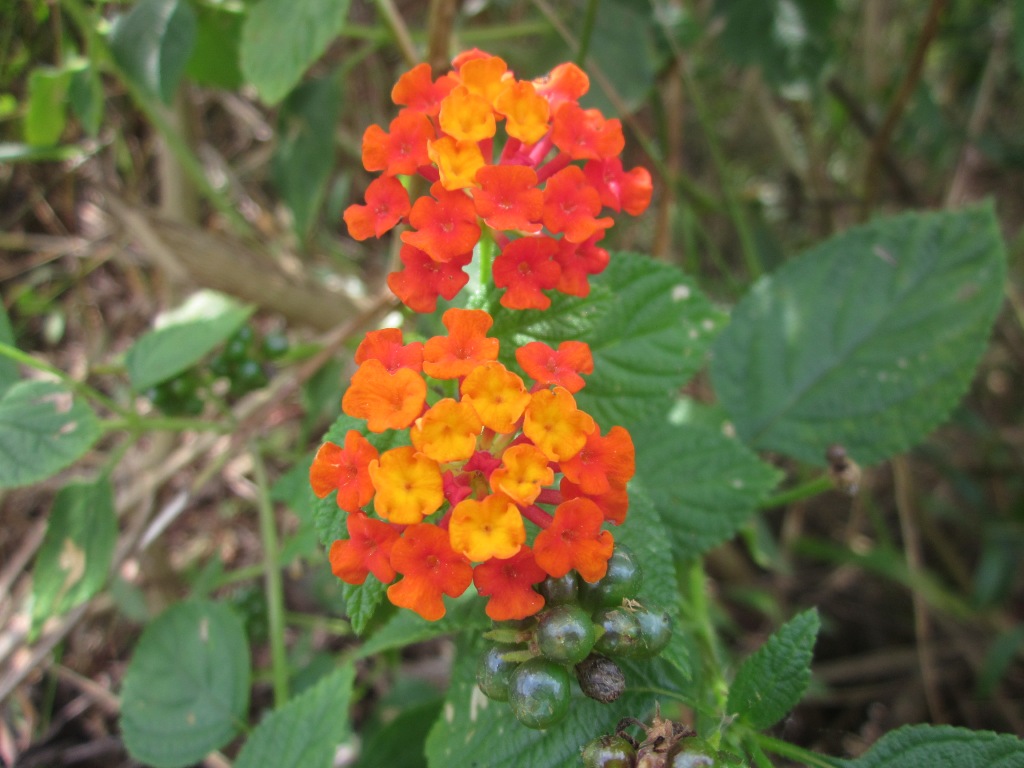
Lantana (Kongini Poovu)

KONGINI FLOWER


                    Lantana flower is common in south india . Kongini is the malayalam name for this flower. Some of the intresting varieties  of Kongini are carols , gold mound , new red , radiation ,samantha , silver mound ,spreading sunset etc..The plant possesses certain medicinal properties also it repels insects and hence used in the preparation of organic insecticides for plant protection in agriculture. The leaves are used to relieve itching against flu , cold , cough , fever and jaundice. Kongini flower producing varying colours like red , purple , yellow , orange , cream and pink ,the flowers usually change in color as they age.